KJ's Collectables LLC.
Buy, Sell. Trade, Consign and More!

The best way to store sports cards and collectibles is to protect them from handling, moisture, heat, sunlight, dust, and sudden temperature changes. Use archival-safe sleeves and rigid holders when appropriate, then keep items in sturdy boxes or cases inside a cool, dry, stable room rather than a garage, attic, or damp basement.
Learning how to store sports cards and collectibles to prevent long-term damage is really about protecting condition before problems appear. Condition can directly affect value, especially with vintage cards, autographs, photographs, comics, toys, and memorabilia that may be difficult to replace.
For collectors looking for Sports Card Storage, Collectible Storage, or help with Sports Cards Columbus OH, a useful rule is to preserve first and make selling, grading, trading, or consigning decisions later.
Start by separating the collection by material and value. Raw cards, graded slabs, signed photographs, comics, toys, and memorabilia do not all need the same holder. A common base card also does not need the same protection as a scarce rookie autograph.
For raw cards, a penny sleeve is a good first layer. Better cards can then go into a properly sized toploader, semi-rigid holder, or magnetic case. Never force a thick card into a standard holder because pressure can damage corners, edges, or the surface.

Cards are paper-based objects, and many collectibles also contain ink, adhesives, photographs, fabric, wood, or plastic. Heat and moisture can contribute to warping, mold, fading, brittleness, sticking, staining, and adhesive failure.
The National Archives advises keeping family papers and photographs below 75°F and below 65% relative humidity. The Library of Congress recommends a more controlled environment for photographs, generally 70°F or below with 30% to 50% relative humidity. You do not need a museum vault, but stable indoor conditions are far better than a hot garage or damp basement.
I would rather see a valuable card in a simple archival-safe sleeve in a stable closet than in an expensive display case sitting in direct afternoon sun. Fancy storage cannot make up for a bad environment.
Both can work. A binder is convenient for viewing sets and lower- to mid-value cards, while a box is usually better for large collections and long-term organization.
If you use a binder, choose archival-safe pages made without PVC and avoid overstuffing pockets. Side-loading pages can reduce the chance of cards sliding out. Make sure pages stay supported instead of sagging under their own weight.
Boxes work well when sleeved cards are packed tightly enough to stay upright without being crushed. Use dividers and label sections by sport, year, set, player, or value tier.
| Item | Practical storage choice |
|---|---|
| Common raw cards | Archival-safe sleeve or card box |
| Better raw cards | Penny sleeve + toploader |
| Thick premium cards | Correct-size sleeve + rigid holder |
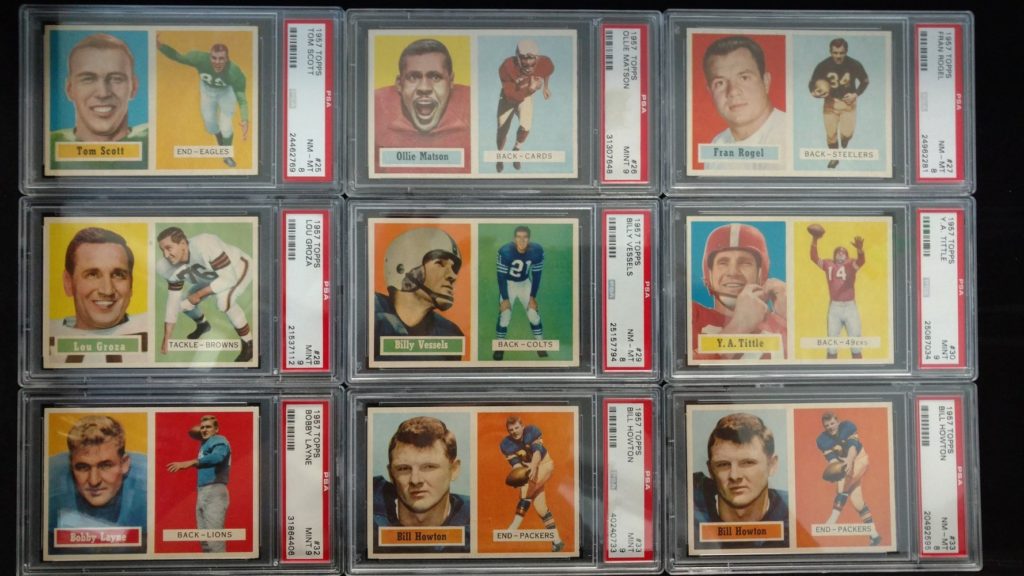
| Graded cards | Slab sleeve + graded-card box |
| Autographed photos | Archival-safe enclosure + rigid support |
| High-value pieces | Individual protection + secure climate-stable storage |
A toploader offers more rigid protection, so it is usually better for individual cards with higher value, sharp corners, autographs, serial numbering, or sentimental importance. A binder makes more sense when the goal is to enjoy an entire set or player collection in sequence.
For cards you may grade, sell, or consign, handle them as little as possible. Use clean hands, hold cards by the edges, and work on a clear surface. Do not wipe, polish, erase, press, or try to “improve” a card before having it evaluated.
That last point matters with older collections. An item does not need to look freshly cleaned to have collector value. In some cases, trying to improve something before understanding what it is can create damage that cannot be reversed.
There is no single best case. The right option fits the card correctly, protects it from crushing and dust, uses stable materials, and can be kept in a controlled indoor environment.
Avoid storage products with a strong chemical smell or soft plastic that may contain PVC. Preservation professionals commonly favor stable plastics such as polyester, polyethylene, and polypropylene for paper and photographic materials. Check material specifications instead of trusting words like “premium” or “collector grade.”
For particularly valuable pieces, individual rigid protection also makes organization easier. You can separate higher-value cards from bulk inventory without constantly handling them every time you want to look through the rest of the collection.
They can, but they should not be if long-term condition matters. Ohio garages can swing from freezing winter temperatures to hot, humid summer conditions, and that repeated cycling is hard on paper-based collectibles.
Garages also increase exposure to dust, insects, leaks, vehicle fumes, and accidental damage. The Library of Congress warns against storage areas with environmental extremes, condensation risk, and water leaks for paper and photographic materials.
Choose an interior closet, finished room, or office instead. Keep boxes elevated from the floor, especially anywhere a plumbing leak or minor flooding is possible.
The best system is one you can maintain. Sleeve cards that need protection, use rigid holders for better pieces, organize them in sturdy boxes, control the environment, and keep a basic inventory.
Photograph valuable pieces and record the year, set, card number, player, grade, serial number, purchase information, and provenance when available. If the collection is later inherited, insured, damaged, or sold, that record can save hours of guesswork.
This is also where KJ’s Collectables LLC can help collectors who are unsure what deserves evaluation or extra protection. KJ’s has been buying, selling, trading, and consigning collectibles for decades, with experience extending beyond sports cards. Identifying an older item before changing or cleaning it is usually the safer move.
The answer depends on whether you collect for enjoyment, history, scarcity, or possible resale. In 2026, market activity remains strong around established legends, major young stars, rookies, scarce parallels, autographs, and low-population graded cards. eBay’s current marketplace data has also highlighted continued interest in Shohei Ohtani and rising attention around players such as Cooper Flagg and Nick Kurtz.
Still, not every rookie or numbered parallel is a smart purchase. Modern print runs can be large, player hype changes quickly, and one “rare” parallel may sit beside many similar versions. Look at completed sales, population reports, condition, set importance, and long-term player demand.
PSA reported grading more than 19 million cards in 2025, and its January-through-April 2026 output rose 39% year over year. With that much graded inventory entering the hobby, condition and scarcity matter even more.
Before spending heavily, understand What Determines the Value of a Sports Card?. A famous player alone does not automatically make a card valuable. Year, set, rarity, grade, demand, autograph status, and overall eye appeal can all make a major difference.
Sports cards often share space with signed photos, game-used memorabilia, comics, programs, ticket stubs, coins, vintage toys, and other pieces. Those items need the same preservation mindset even when the exact holder is different.
Keep paper items away from direct sunlight. Avoid tape, rubber bands, paper clips, and adhesives touching older paper or photographs. Preserve original packaging, letters of authenticity, receipts, and other provenance rather than separating them from the item.
For an inherited collection, resist the urge to clean everything before identifying it. Aggressive cleaning can permanently change a surface and reduce collector interest.
Good storage should make the collection safer and easier to enjoy. Create simple categories such as display, long-term hold, grading candidates, duplicates, sell or trade, and needs research.
Review the collection once or twice a year. Look for moisture, warped holders, yellowing, cracked cases, pests, or boxes under too much weight. If something has changed, fix the environment before buying more storage supplies.
A collection can take decades to build and one leak, hot summer, or careless handling session to damage. Stable conditions, appropriate materials, careful handling, and good records are the strongest long-term protection.